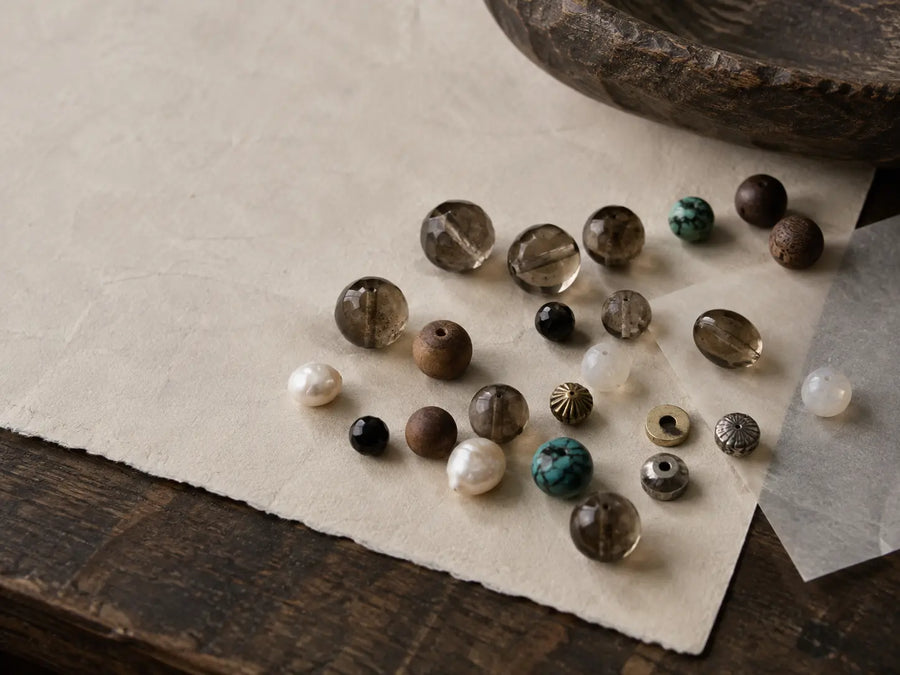
Crystal bracelets can be small in scale and still change the balance of an outfit. A flash of pale stone, a darker bead, or a cool metal detail can draw the eye to the wrist without requiring the rest of the look to become more elaborate.
The easiest place to begin is not with a rule about what a particular stone is meant to represent. Begin with the clothes you already reach for: their colors, textures, sleeve shapes, and level of contrast.
A bracelet can echo something familiar, introduce one quiet point of difference, or serve as the only piece of jewelry in an otherwise simple look. It does not need to match perfectly. It only needs to feel considered enough to belong.
This guide looks at how to style crystal bracelets for everyday wear, whether you prefer one restrained piece or a small, balanced stack.
Start With the Wardrobe You Already Wear
Before deciding how a bracelet should be styled, look at the part of your wardrobe that is already in regular use—not the clothes you imagine wearing someday, but the pieces you naturally return to each week.
Notice:
-
which colors appear repeatedly;
-
whether your fabrics feel soft, structured, smooth, or visibly textured;
-
whether your sleeves are usually short, fitted, rolled, knitted, or loose;
-
which metal tones already appear in your jewelry and accessories;
-
and how much contrast you normally feel comfortable wearing.
These observations create a more useful starting point than trying to match a bracelet to a fixed style category.
If your wardrobe is built around cream, grey, washed blue, black, or brown, a bracelet might repeat one of those tones or introduce a small point of contrast. Pale translucent stones can sit quietly beside light fabrics, while deeper stones may give the eye somewhere more defined to land.
These are relationships, not rules. A pale bracelet can feel especially clear against black. A darker bracelet can soften beside brown, denim, or textured knitwear. A brighter accent can work when it appears only once and the rest of the outfit remains restrained.
Begin with one visible connection: a repeated color, a related metal tone, a similar texture, or a shared level of visual weight. Once that relationship is clear, the bracelet is less likely to feel added at the last moment. It begins to feel like part of the wardrobe itself.

Choose a Color Relationship
Color does not need to match exactly for a bracelet to feel connected to an outfit. In many cases, a relationship between colors is more natural than a perfect match.
One approach is repetition. A grey-blue stone can quietly echo washed denim, while warm brown or smoky tones can connect with leather, wool, or an earth-toned layer. Pale stones may repeat the softness of cream, white, or light grey.
Another approach is contrast. A dark bracelet can give definition to a pale outfit. A small turquoise or blue accent can introduce color into an otherwise neutral combination. The contrast does not need to be dramatic; one distinct note is often enough.
You can also work with temperature. Cool-toned stones and silver details often sit naturally beside grey, blue, white, and black. Warmer stones may relate more easily to cream, camel, brown, olive, or muted gold accents.
None of these relationships should be treated as fixed rules. Natural stones contain variation, and the same bracelet may appear different as the light, fabric, and surrounding colors change.
If you are deciding between several stones, you can explore stones by color and character in the Stone Library. Use their visual qualities as a starting point, while leaving their personal meaning open.
Consider Bead Size and Proportion
The visual weight of a bracelet matters as much as its color.
A bracelet made with small beads, fine metal details, or a narrow profile usually creates a quieter line around the wrist. It can sit beside soft fabrics and restrained outfits without becoming the main focus.
Larger beads, irregular shapes, or a more substantial arrangement create a stronger visual point. They may work well with simple clothing because the surrounding space allows the bracelet to remain clear.
Proportion also depends on the garment. A delicate bracelet may disappear beside a heavy, oversized sleeve, while a more substantial design can hold its place. Against a fitted shirt or bare wrist, even a fine bracelet may feel visually complete.
This does not mean that a small wrist requires a small bracelet, or that a larger wrist requires a heavier one. The more useful question is how much presence you want the bracelet to have within the whole outfit.
If the bracelet should remain in the background, choose a quieter scale or a lower level of contrast. If it should become the focal point, allow it more size, texture, or separation from the surrounding clothing.
Let the Sleeve Set the Frame
A sleeve creates the frame around a bracelet.
With short sleeves or a bare wrist, the bracelet has more visual space. A single piece can feel deliberate because there is little competing with it.
A rolled shirt cuff creates a narrower frame. The bracelet sits between the edge of the fabric and the hand, making proportion and comfort more noticeable. Leaving a small amount of space between the cuff and bracelet can keep the arrangement from feeling compressed.
Fitted knitwear can create a soft background for a bracelet, particularly when the stone colors relate to the fabric. Depending on the bracelet’s structure and surface, it may sit over a smooth cuff or remain directly against the wrist.
Loose sleeves behave differently. They may partly cover the bracelet or move across it throughout the day. In that case, consider whether raised details, charms, clasps, or irregular beads are likely to catch on the fabric.
The bracelet does not always need to remain fully visible. A partial glimpse beneath a sleeve can feel more natural than arranging it for constant display.
Wear One Bracelet as a Focal Point
Wearing one bracelet does not make an outfit feel unfinished.
A single piece can provide enough color, reflection, or texture to give the wrist a clear point of interest. This is especially useful when the bracelet already contains several materials, an irregular focal bead, or a noticeable contrast.
Begin by letting one feature lead. It might be the blue flash of a stone, the shape of a central bead, a darker section, or the rhythm created by silver details.
The rest of the outfit does not need to repeat every material in the bracelet. One connection is enough: a related color, a cool metal tone, or a similar sense of softness or structure.
Single-bracelet styling can also make natural variation easier to notice. Without several pieces competing for attention, small differences in translucency, surface, shape, and color become part of the look.
For a specific example of materials working through restraint rather than perfect matching, see how quiet contrast shapes Veiled Light.

Build a Simple Bracelet Stack
A bracelet stack is easier to balance when every piece does not try to become the center.
Start with one bracelet as the main piece. This may be the design with the strongest color, the largest beads, the clearest pattern, or the detail you most want to notice.
Then add one or two quieter pieces. They might repeat a stone color, introduce a finer scale, or carry through a related metal tone. Repetition creates connection, while a small change in texture or width keeps the stack from looking mechanically uniform.
A simple stack often works best when it has one clear relationship:
-
a shared color;
-
a repeated stone or metal;
-
a gradual change in bead size;
-
or a balance between one detailed piece and one restrained piece.
Leave room for the individual bracelets to be seen. If every piece is equally bold, the stack can lose its rhythm and begin to feel visually crowded.
Comfort matters as well. Notice how the bracelets move together, whether their hardware rubs against neighboring stones, and whether the combined weight feels natural during ordinary activities.
There is no required number of bracelets. Two pieces can create a complete stack, while one bracelet may still be the better choice for a particular outfit.

Keep Everyday Wear Comfortable
An everyday bracelet should suit the way the day is actually lived.
If you spend long periods typing, consider whether larger beads, dangling details, or multiple bracelets press against the desk. A slimmer piece or a looser stack may feel more comfortable, but the right choice depends on the bracelet and the wearer.
For work involving tools, exercise, water, cleaning products, or repeated contact with hard surfaces, it may be better to remove the bracelet. Natural stones, metal components, stringing materials, and finishes do not all respond to daily wear in the same way.
Sleeves, bags, and other jewelry can also affect comfort. Check whether the bracelet catches on knitwear, meets a watch at an awkward point, or moves more than you prefer.
If a bracelet repeatedly needs adjustment, that may be a question of fit rather than styling. A well-considered color combination will not compensate for a piece that feels distracting on the wrist.
For guidance on cleaning, storage, water exposure, and protecting different materials, read how to care for natural stone bracelets in our Materials & Care guide.
Common Questions
How do you style a crystal bracelet?
Begin with one relationship between the bracelet and the outfit. This could be a repeated color, a similar metal tone, a contrast between light and dark, or a proportion that suits the sleeve. The bracelet does not need to match every element of the clothing.
Can you wear crystal bracelets every day?
Crystal bracelets can be styled with everyday clothing, but whether a particular bracelet should be worn continuously depends on its stones, construction, metal components, stringing material, and the activities involved.
Remove bracelets when an activity may expose them to impact, moisture, chemicals, or unnecessary strain. Refer to the care guidance for the materials in the individual piece.
How do you stack crystal bracelets without making the wrist look too busy?
Choose one bracelet to lead, then add one or two quieter pieces. Repeat a color, stone, metal, or scale so the pieces feel connected. Avoid making every bracelet equally large, detailed, or high in contrast.
Do crystal bracelets need to match your outfit?
No. They can repeat a color already present, introduce a restrained contrast, or add a different texture. A bracelet usually feels considered when it has one visible relationship with the outfit, even if the colors are not identical.
Let the Bracelet Enter the Life You Already Have
Styling a crystal bracelet does not require a new wardrobe or a fixed set of rules.
Begin with what is already familiar: the colors you wear repeatedly, the fabrics you enjoy, the shape of your sleeves, and the amount of visual contrast that feels natural to you.
From there, decide how much presence the bracelet should have. It can remain quiet, become one clear focal point, or join a small stack built around a shared color or material.
The aim is not to make every part of an outfit agree perfectly. It is to create enough connection that the bracelet feels intentional while still leaving room for variation.
Natural stones will change with light, movement, and their surroundings. That change is part of what allows the same bracelet to enter more than one outfit—and more than one kind of day.
When you are ready to find a piece that fits your own colors and daily rhythm, explore finished crystal bracelets from Veil Loom.